Showing posts with label March 2015. Show all posts

Thursday, 24 March 2016

100 Million Years of Food / Stephen Le

4 out of 5 stars
There are few areas of modern life that are burdened by as much information and advice, often contradictory, as our diet and health: eat a lot of meat, eat no meat; whole-grains are healthy, whole-grains are a disaster; eat everything in moderation; eat only certain foods--and on and on. In One Hundred Million Years of Food biological anthropologist Stephen Le explains how cuisines of different cultures are a result of centuries of evolution, finely tuned to our biology and surroundings. Today many cultures have strayed from their ancestral diets, relying instead on mass-produced food often made with chemicals that may be contributing to a rise in so-called "Western diseases," such as cancer, heart disease, and obesity.

Travelling around the world to places as far-flung as Vietnam, Kenya, India, and the US, Stephen Le introduces us to people who are growing, cooking, and eating food using both traditional and modern methods, striving for a sustainable, healthy diet. In clear, compelling arguments based on scientific research, Le contends that our ancestral diets provide the best first line of defense in protecting our health and providing a balanced diet. Fast-food diets, as well as strict regimens like paleo or vegan, in effect highjack our biology and ignore the complex nature of our bodies. In One Hundred Million Years of Food Le takes us on a guided tour of evolution, demonstrating how our diets are the result of millions of years of history, and how we can return to a sustainable, healthier way of eating.


This author tackles a variety of interesting topics, each one feeling like it could be the basis for its own book.  He plunges right in, pointing out that many primates are insectivorous and that many traditional cuisines include insects on the menu.  Fortunately or unfortunately (whichever way you choose to look at it), most of us have lost our taste for the chitinous creatures and our prejudices have rubbed off on those who earlier in history did enjoy this high protein foodstuff.  (Just for the record, I will NOT be joining this movement!)

Wherever you look nowadays, there is someone who is willing to tell you what you should be eating and why.  Should we give up meat?  If so, should we eat dairy products or should we go vegan?  Should we be eating fish?  How about agricultural staples like wheat or legumes?  You can find opinions on all of these questions, just hunt around on the internet for a little while.

As Stephen Le points out, some of these issues are going to boil down to sustainability issues.  We are rapidly depleting the ocean’s fish and clearing the oxygen-generating forests to create grazing land for cattle, which are quite inefficient at converting vegetation into flesh.

What I really liked was his sensible suggestion that we quit looking at food in terms of specific nutrients and instead consider it in whole cuisines.  So a person should consider their genetic heritage and try eating more foods consistent with what their own specific ancestors ate.  As a descendant of Danish immigrants, I am probably fine eating dairy products (while many Asian and Native Canadians lack the digestive enzymes to deal effectively with lactose).  I should also consider including more fish in my meal planning (pickled herring, anyone?) to mimic the ancestral condition.  However, I am a devoted maker of curries and stir fries, not very Scandinavian!

Lots to think about, but nothing startling.  Yes, we should exercise more (going walking this evening), eat more like our ancestors (without worrying about going all Paleo), worry less about vitamin pills (as my doctor says, they just produce expensive urine), and eat real food (shades of Michael Pollen).

A nice summary for those who aren’t sure about all the food wars raging in cyberspace.

Thursday, 16 April 2015

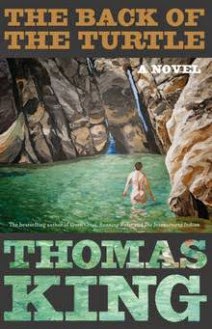
The Back of the Turtle / Thomas King


5 out of 5 stars
In The Back of the Turtle, Gabriel returns to Smoke River, the reserve where his mother grew up and to which she returned with Gabriel’s sister. The reserve is deserted after an environmental disaster killed the population, including Gabriel’s family, and the wildlife. Gabriel, a brilliant scientist working for DowSanto, created GreenSweep, and indirectly led to the crisis. Now he has come to see the damage and to kill himself in the sea. But as he prepares to let the water take him, he sees a young girl in the waves. Plunging in, he saves her, and soon is saving others. Who are these people with their long black hair and almond eyes who have fallen from the sky?

Filled with brilliant characters, trademark wit, wordplay and a thorough knowledge of native myth and story-telling, this novel is a masterpiece by one of our most important writers.  


My first Thomas King novel, but undoubtedly not my last. When I started this novel, I was somewhat reluctant—reading something recommended, rather like taking medicine. Promised good results, but feeling it was a bit of a chore.

That feeling was completely gone within the first chapter. The cast of characters (and they are characters) are charming, even the poor CEO, Dorian, who I came to pity. The scientist, Gabriel, who obliquely caused an event known as The Ruin, comes home to the scene of the crime, intending to see the devastation he caused and to commit suicide. However good he may be at creating toxic substances (the ironically named GreenSweep), he is not very good at self-destruction. He meets a woman who used to live on the Smoke River Reserve that was closed after The Ruin (Mara), the keeper of the hotsprings who speaks in biblical phraseology (Nicholas Crisp), and a young boy who survives by salvaging items from the beach (Sonny).

You cannot help but care for all of these people, who are finding their way in the wake of the disaster, taking care of each other to greater or lesser extents. Their stories are in marked contrast to the CEO of the company which caused the disaster, Dorian who runs Domidion. King takes a lot of pokes at our current system of capitalism through the life of Dorian. One of Dorian’s main scientists has gone missing and can’t be found (that would be Gabriel). Two dams on tailings ponds in the Athabasca area have broken, releasing toxic sludge into the Mackenzie River system and eventually the Arctic Ocean. While investigating this disaster, the media learns of the defection of Gabriel and the connection to GreenSweep and the Smoke River Reserve—Dorian is only saved from disaster by the advent of a bigger news story. But his wife has left him and he is reduced to shopping to try to make himself feel better. We witness his random purchases—expensive ties, extravagant watches, exclusive scent. When he arrives home and is still sad, he attributes the feeling to the fact that he did not buy TWO watches, when really how many watches can one person wear? He truly is the poor little rich man.

Despite its very intelligent swipes at capitalism, environmental problems, consumerism and the like, this is a highly engaging, highly entertaining work which will leave you with a good feeling about the world. 

Wednesday, 15 April 2015

Nora Webster / Colm Toibin

4 out of 5 stars
Set in Wexford, Ireland, Colm Tóibín’s superb seventh novel introduces the formidable, memorable and deeply moving Nora Webster. Widowed at forty, with four children and not enough money, Nora has lost the love of her life, Maurice, the man who rescued her from the stifling world to which she was born. And now she fears she may be drawn back into it. Wounded, strong-willed, clinging to secrecy in a tiny community where everyone knows your business, Nora is drowning in her own sorrow and blind to the suffering of her young sons, who have lost their father. Yet she has moments of stunning empathy and kindness, and when she begins to sing again, after decades, she finds solace, engagement, a haven—herself. 

Nora Webster is a young widow in 1960s Ireland. She is charming, formidable, weak, heart-broken, and grief-stricken by turns. In age, Nora falls between my mother’s and my grandmother’s generations—about the time that women were supposed to aspire only to being housewives and that men were in charge of the finances and the family. When her husband Maurice dies, she is left as sole parent to four children and provider to at least the two youngest. She has to find her financial feet and deal with the work-world, all while trying to find a balance that will work for her children.

The older girls are already into young adulthood and in many ways are more sophisticated than their mother. They have education, are involved in politics, and have social lives which they find engaging. Nora has been so subsumed in being a wife and mother, that she is unsure which direction that she truly wants to go in. We watch her navigate her new life and try to maintain some privacy in the midst of a village where everyone seems to know everyone else’s business.

If you’ve lived in a small community, you know how judgemental their members can be. You question all your decisions—is it all right to laugh? After all, you’re supposed to be grieving. Can you go out or appear to have some fun without getting labelled as not suitably grief-stricken? It’s often a catch 22—people are often impatient for you to get over your grief, but also willing to judge if they think you are getting over it too quickly. In the end, you must do as Nora does—do what you want and let others think what they will. She rediscovers her love of music and singing, realizes that she can now decorate her home to her own taste, and generally becomes the captain of her own destiny.

The novel is a hopeful one—grief can be lived through, life can go on, and happiness can be regained, albeit in a much different life. 

Monday, 6 April 2015

The Damned / Andrew Pyper

3 out of 5 stars
Danny Orchard wrote a bestselling memoir about his near-death experience in a fire that claimed the life of his twin sister, Ashleigh, but despite the resulting fame and fortune he’s never been able to enjoy his second chance at life. Ash won’t let him.

In life, Danny’s charming and magnetic twin had been a budding psychopath who privately terrorized her family—and death hasn’t changed her wicked ways. Ash has haunted Danny for twenty years and now, just when he’s met the love of his life and has a chance at real happiness, she wants more than ever to punish him for being alive—so she sets her sights on Danny’s new wife and stepson.

Danny knows what Ash really wants is him, and he’s prepared to sacrifice himself in order to save the ones he loves. The question is: will he make it back this time?


I had to set some boundaries for myself with this book: no reading after dark. Seriously. It made me crazy. Why does a supernatural element in a story make me into a crazy woman? I can read true crime, all about serial killers and even the gruesome details of what all they did. I can read all about forensics and autopsies while eating lunch. But throw some supernatural aspect into the story and I am reduced to hiding under the covers and praying for morning. That said, I did like the book and as much as it scared the poop out of me, I had to read to the end to see how it all got resolved.

What if you had a twin sister? Who was a psychopath? Who controlled your life and everyone in your family? And who saw no reason to stop controlling all of you after her death? What if you almost died when she did, but returned to life after a near-death experience? You’ve seen the afterlife (The After) and written a best-selling book about it, but you have nothing in this life that makes you happy. Until you meet the love of your life.

This book is all about what Danny is willing to do for love. To what lengths will he go to keep his new wife and stepson? How is he going to break the link between himself and his twin, Ash? Thankfully, most of us don’t have to make this kind of decision—mostly we have to decide issues like am I willing to move to be with my beloved? Can I be a decent step-parent? Am I willing to sell/rent out my house and maybe sell my furniture? Am I willing to possibly have to divide my assets with this person at some undetermined point somewhere in the future? (Can you tell that I’m not a romantic?)

Well told and gripping, but it’s only getting three trembling stars because I am reading outside my genre comfort zone.

Monday, 30 March 2015

The Evening Chorus / Helen Humphreys

4.5 out of 5
Resigned to living out the Second World War in a German POW camp, James Hunter, an English officer, begins studying a pair of redstarts near the camp. His interest in the birds captures the attention of the Kommandant and gives James cause to fear for his life. Meanwhile, back in England, James's young wife, Rose, falls headlong into a passionate affair with another man. When James's sister, Enid, is bombed out of her London flat, she comes to stay with Rose, and the two women form a surprising friendship that alters the course of both of their lives.

What a beautifully written book! Under normal circumstances, I avoid books about World War II like the plague. By and large, they do not appeal to me. But how could I resist a book in which one of the main characters, James, a POW in Germany, studies a pair of Redstarts (those are birds, for the non-birders out there) as a way to see himself through the war.

Birds are one of the ways to my heart and this book wiggled its way in quickly. I found it amazing how well I felt I knew the various characters and how strongly I felt for each of them despite the sparseness of the writing. There are no extraneous words, no awkward phrases, just gracefulness.

There were so many contrasts: James watching the birds while the German guards watched him. The freedom of the Redstarts compared with the confinement of the prisoners. The misinterpreted kindness of the Kommandant with the brutality of some of his men. The real lives of both Germans and POWs compared with their current posting.

The women, Rose and Enid, are no less interesting and all of them find some solace in the natural world. Since the outdoors and bird watching have been responsible for healing many of my own wounds, I guess I am predisposed to find this book uplifting. Because I could see something wonderful the next time I go out looking—and isn’t that something worth living for?

Thursday, 26 March 2015

Kraken Bake / Karen Dudley

4 out of 5 stars
REHEAT THE KRAKEN!

It’s a great day for Greece when Perseus defeats the dreaded kraken. But victory begins to lose its lustre when tonnes of tentacles start to swamp the shores and fishing nets of the Aegean. Now after weeks of kraken cakes, kraken kabobs, kraken fritters and kraken stew, everybody is getting decidedly sick of kraken—none more so than Chef Pelops.

In response to the "kraken crisis", the city of Athens announces the inaugural Bronze Chef competition. Normally, Pelops would jump at the chance to prove himself the best celebrity chef in Greece. The trouble is, the competition’s secret ingredient is sure to be kraken—and, having once offended Poseidon, Pelops can’t cook kraken to save his life.

To make matters worse, the Chef has serious cash flow problems and the woman he secretly loves is about to marry his best friend. Meanwhile, his loathsome rival Mithaecus has vowed to win the contest by fair means or foul.

Now, Pelops must overcome the sea god’s curse to prove once and for all that he is the better chef—a task made all the more difficult by the insufferable antics of a most unexpected relative...


A worthy follow up to Food for the Gods. A quick disclaimer here: the author is a friend of mine. I was fortunate enough to go to a reading from Kraken Bake held here in Calgary, and I therefore have the advantage of hearing her lovely voice in my mind’s ear telling me the tale.

Chef Pelops is in quite a state—in fact, he has got himself so worked up that he is being an insensitive jerk to pretty much everyone around him, even the friendly gods, Dionysus and Hermes. And he has enough unfriendly gods to deal with—Hera has it out for him and Poseidon holds a deity-sized grudge. The result of the latter is that activities requiring water and/or sea creatures do not run smooth for Pelops. He cannot successfully cook Kraken under any circumstances.

I love the combination of historical facts (bread dildos, anyone?) with (somewhat altered) mythology (a Pegasus who stomps rainbows and farts flowers?) and a liberal dose of the author’s imagination (why does Perseus talk like a surfer dude anyway?). Throw in some current pop-culture (a Bronze Chef competition, you say?) and this book is a salad of fun. Karen’s sense of humour appeals to me strongly, as you might expect.

But some more serious issues are examined through Pelops’ struggles—how do we establish and maintain our reputations? How important is career success to a happy life? Who are the most important people in our lives and are we doing what we need to in order to maintain those relationships?

It’s not necessary to have read Food for the Gods in order to enjoy Kraken Bake, but what the heck, go read it too before you begin this one. We need to support originality, not to mention the Canadian publishing scene. I can’t guarantee that you will enjoy this book as much as I did, but I encourage you to give it a try.

Wednesday, 25 March 2015

The Book of Jhereg / Steven Brust

4 out of 5 stars
A welcome addition to any fantasy fan's library, The Book of Jhereg follows the antics of the wise-cracking assassin Vlad Taltos and his dragon-like companion through their first three adventures:Jhereg, Yendi, and Teckla. From his rookie assassin days to his selfless feats of heroism, the dauntless Vlad will hold readers spellbound and The Book of Jhereg will take its place among the classic compilations in fantasy.

 An anthology containing the first three novels of the Vlad Taltos series. A very enjoyable introduction to his world and life. It did its job—I was sandwiched in a middle seat on an airplane, badly needing distraction from the two men I was shoe-horned between for the flight from Houston to Calgary (4 hours, if you’re interested). Dude on my left seemed to resent my very existence, so it was with great pleasure that I imagined my personal assassin, Vlad, doing his thing.

The first book (Jhereg) was spent getting to know the wise-cracking, paranoid assassin and learning the lay of the land, so to speak, on the world he inhabits. Brust includes a lot of detail—a multi-layered, complex social structure, a couple of systems of magic/sorcery, a fairly large cast of characters, plus a few new biological creatures to assimilate (specifically Vlad’s jhereg familiar, a flying lizard). Brust leaves you to glean facts along the way as he flings Vlad into a rather Rococo plot which twists and turns as more facts are uncovered. Brust owes a debt to series like Harry Harrison’s Stainless Steel Rat, whose main character is Slippery Jim DiGriz, another charming conman.

Book two (Yendi) told the backstory of Vlad’s marriage. I appreciated his wife Cawti, as she had her own kick-butt history and a female business partner with whom she obviously had a real friendship. However, the two women never really get to take centre stage for a scene—their conversations are assumed off the page, which disappointed me somewhat. I had hoped that Yendi would pass the Bechdel test, but no dice.

Teckla (Book three) changed the tone of the series entirely. Suddenly, it becomes necessary for Vlad to question the morality of his crime & assassination business and to decide if he is satisfied in a society where he is constantly discriminated against because of his race. These are serious questions which Vlad struggles with, being in a rather privileged position for an Easterner. He could lose it all, but what is it actually worth? Plus he is soon at odds with Cawti—which causes believable distress for our assassin friend. I appreciated the depiction of continued stress and misunderstandings in the relationship, as both parties sort out what they can and cannot live with.

With as many complexities as Brust introduced in these two volumes, there are bound to be details that don’t get as much attention as they deserve. For me, I wished that Vlad’s relationship with his familiar, Loiosh, was better developed. The flying lizard-like jhereg had great potential that never really got explored—he was more like a living, smart-cracking weapon than like a true partner to Vlad.

I will happily read more books in this series in months to come.

Monday, 23 March 2015

Merchanter's Luck / C.J. Cherryh

4 out of 5 stars
The fateful meeting between the owner of a tramp star-freighter that flies the Union planets under false papers and fake names and a proud but junior member of a powerful starship-owning family leads to a record-breaking race to Downbelow Station--and a terrifying showdown at a deadly destination off the cosmic charts.

Sandor Kreja is a survivor. He managed to escape the massacre of his family and has run the family spaceship, first with his brother, then without, for a very long time. The ship’s control system speaks in his brother’s voice, a comforting reminder of the loving connections he used to have. He has lived at the edge of the law and at the margins of society for his entire adult life and is longing to just have a chance to achieve a normal life.

Contrast this with Allison Reilly, who comes from an enormous family who run the ship Dublin Again. Allison knows that her family always has her back—the downside of this is that everyone knows each other’s business and feels no compunctions about expressing opinions about it. Add to that the limited number of meaningful positions available to the young merchanters on the ship—just like Generation Xers who follow the Baby Boom generation, they are ready to move on to bigger and better things, but the previous generation isn’t going anywhere.

Opposites attract, they say. It’s inevitable that when these two meet, there are fireworks. A casual hook-up becomes much more when Sandor recklessly follows Dublin Again to their next port of call, despite his lack of legal paperwork. Although not a traditional romance, there is a thread of their relationship running through the work, drawing the reader along to see if it will all work out. Can the lonely captain accept people back into his life again? Can the crew members of Dublin Again exorcise the ghosts of Sandor’s family from his ship? Can people from such divergent backgrounds trust each other?

I was struck by the hungry loneliness of the young man, alone in space on a ship built for a family. As part of a university project, my sister once attended a substance abuse support group. I remember how appalled she was when she realized that each of these people had absolutely no loving connection in the world. Their families had either given up on them or were part of their problems. Their only friends were other addicts. They had no one to encourage them, help them, or give them any kind of boost. It’s amazing, really, that any of them ever manage to escape those circumstances, and yet some do. I felt like Sandor was up against the same kinds of obstacles—no family, no friends, no trust, no papers, yet he was clawing his way towards respectability.

I’ve never known real loneliness, for which I am thankful. I hope that books like this one are as close as I ever get.


Book number 167 from the NPR list of science fiction and fantasy classics.

Thursday, 19 March 2015

The Eyre Affair / Jasper Fflorde

3 out of 5 stars
Welcome to a surreal version of Great Britain, circa 1985, where time travel is routine, cloning is a reality (dodos are the resurrected pet of choice), and literature is taken very, very seriously. England is a virtual police state where an aunt can get lost (literally) in a Wordsworth poem, militant Baconians heckle performances of Hamlet, and forging Byronic verse is a punishable offense. All this is business as usual for Thursday Next, renowned Special Operative in literary detection, until someone begins kidnapping characters from works of literature. When Jane Eyre is plucked from the pages of Brontë's novel, Thursday must track down the villain and enter the novel herself to avert a heinous act of literary homicide.

An eccentric but charming book. I read it on my way to Mexico—there was plenty of time, we missed our connection in Mexico City and had to buy a new ticket for much later in the evening. The tour leader who was expecting us is a charming Welshman, who had recommended Jasper Fforde to me a couple of years ago (on an earlier tour). It was time to be able to say that I had given it a try.

I do think that a passing familiarity with Jane Eyre would be a good thing before picking up this novel, but even if you’ve never even read the blurb of JE, you should still be able to find some amusement within.

The humour reminded me somewhat of Douglas Adams—very British and somewhat silly. I loved the pet dodos, the People’s Republic of Wales, the “new” ending to Jane Eyre, debates about Shakespeare, and the Literary Forces, among other details.

Recommended for English majors, Bronte fans, Shakespeare buffs, and anyone else who has read widely in the classics, but is willing to be a bit silly.